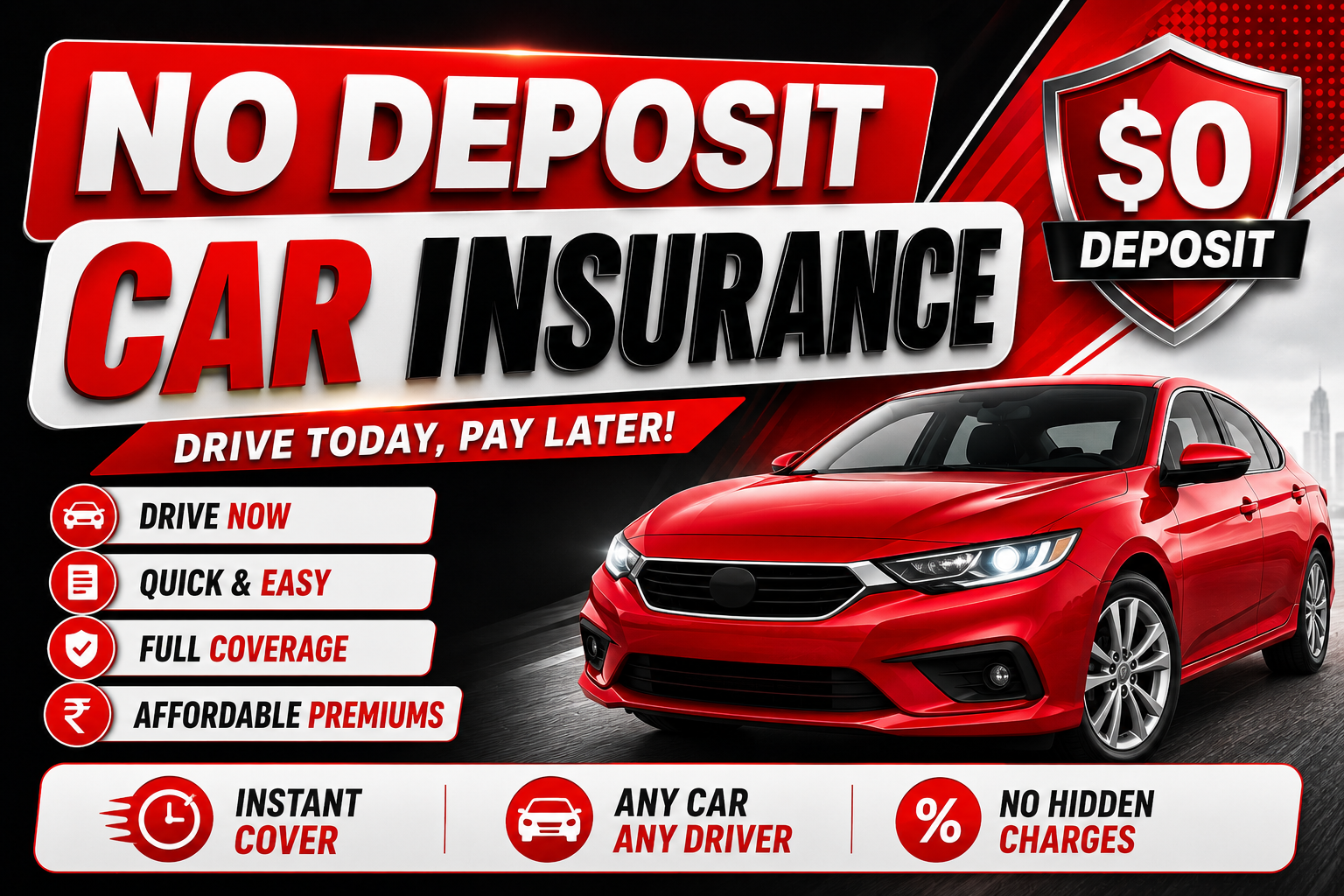
Many drivers search for no-deposit car insurance because they need immediate coverage without paying a large upfront amount. Whether you’re facing a tight budget, purchasing a new vehicle, or switching insurers, reducing initial costs can make car insurance more accessible. However, the term “no deposit car insurance” is often misunderstood. In most cases, insurance companies require some form of payment before a policy becomes active. Understanding how these policies work can help you find affordable coverage while avoiding misleading offers and unexpected expenses.
What Is No Deposit Car Insurance?
No deposit car insurance refers to an insurance policy that allows drivers to start coverage without making a large upfront payment. While advertisements may use the phrase “no deposit,” most insurers still require the first monthly payment before activating coverage.
In practical terms, these policies typically offer:
- Low upfront costs
- Monthly payment plans
- Flexible billing options
- Immediate proof of insurance after payment
- Reduced financial burden at policy start
Because insurance companies assume risk from the moment coverage begins, completely free activation without any payment is extremely rare.
How No Deposit Car Insurance Works
Traditional car insurance policies often require a substantial down payment when coverage starts. With low-deposit or no-deposit options, the insurer spreads more of the policy cost across monthly installments.
For example, instead of paying several months of premiums upfront, you may only need to make your first monthly payment. The remaining balance is divided throughout the policy term.
This arrangement can make insurance more manageable for drivers who prefer predictable monthly expenses rather than a large initial payment.
Is True No Deposit Car Insurance Available?
The answer is usually no. Most insurance providers require some payment before coverage becomes active. Insurance is a contract based on financial risk, and insurers generally will not provide coverage without receiving at least the first premium payment.
When companies advertise no deposit coverage, they are often referring to:
- No large down payment
- Low initial payment requirements
- First-month payment only plans
- Flexible installment options
Reading policy details carefully helps avoid misunderstandings about what must be paid upfront.
Who Might Benefit from No Deposit Car Insurance?
Several types of drivers may find these policies particularly useful.
Drivers on a Tight Budget
People who cannot afford a large upfront payment often benefit from monthly billing arrangements that spread costs throughout the year.
First-Time Vehicle Owners
New drivers frequently face multiple expenses, including registration, taxes, and vehicle maintenance. Lower startup insurance costs can ease the financial burden.
Drivers Switching Insurance Companies
When changing providers, some drivers prefer avoiding large deposits while transitioning to a new policy.
Individuals Needing Immediate Coverage
Drivers who require same-day insurance coverage may appreciate policies that activate after a small initial payment.
Factors That Affect Your Insurance Costs
Even with no-deposit or low-deposit options, several factors determine the total premium.
Driving History
A clean driving record typically results in lower insurance rates. Accidents, speeding tickets, and violations can increase costs.
Vehicle Type
Cars with higher repair costs, theft rates, or performance capabilities often cost more to insure.
Location
Insurance companies consider local accident rates, traffic density, weather risks, and theft statistics when calculating premiums.
Age and Driving Experience
Young or inexperienced drivers generally pay higher premiums because they represent greater insurance risk.
Coverage Selection
Policies with comprehensive coverage, collision protection, and additional benefits usually cost more than basic liability coverage.
How to Find Affordable No Deposit Car Insurance
Finding affordable coverage requires more than simply choosing the lowest advertised price.
Follow these steps:
- Compare quotes from multiple insurers.
- Ask about monthly payment plans.
- Review available discounts.
- Select coverage that matches your needs.
- Maintain a clean driving record.
- Consider higher deductibles if appropriate.
- Verify all fees and payment requirements before purchasing.
Taking time to compare options can help you secure better coverage at a reasonable cost.
Advantages of No Deposit Car Insurance
Drivers often choose these policies because of several potential benefits.
- Lower upfront financial commitment
- Faster access to insurance coverage
- Improved monthly budgeting
- Flexible payment schedules
- Reduced pressure from large initial expenses
For many households, predictable monthly payments are easier to manage than high lump-sum costs.
Potential Drawbacks to Consider
While lower upfront costs can be appealing, there are some disadvantages.
- Higher monthly payments
- Possible installment fees
- Greater long-term policy costs
- Missed payment risks
- Potential policy cancellation for non-payment
Understanding the total annual cost is just as important as focusing on the initial payment amount.
Common Mistakes When Shopping for No Deposit Coverage
Many drivers make decisions based solely on advertising claims.
Avoid these common mistakes:
- Assuming coverage starts without any payment
- Ignoring policy exclusions
- Comparing only monthly premiums
- Overlooking administrative fees
- Choosing insufficient coverage to lower costs
- Failing to review policy terms carefully
A thorough review helps ensure the policy meets your protection needs.
Is No Deposit Car Insurance Worth It?
For drivers who need immediate coverage and cannot afford a large upfront payment, no-deposit or low-deposit insurance can be a practical solution. The key is understanding that most policies still require an initial payment and that lower startup costs may result in higher monthly expenses. Comparing quotes, reviewing payment options, and understanding total policy costs can help you choose a plan that provides reliable protection without creating unnecessary financial strain.
Whether you are purchasing insurance for the first time or looking for a more flexible payment arrangement, evaluating both coverage quality and affordability will help you make a smarter decision and maintain continuous protection on the road.