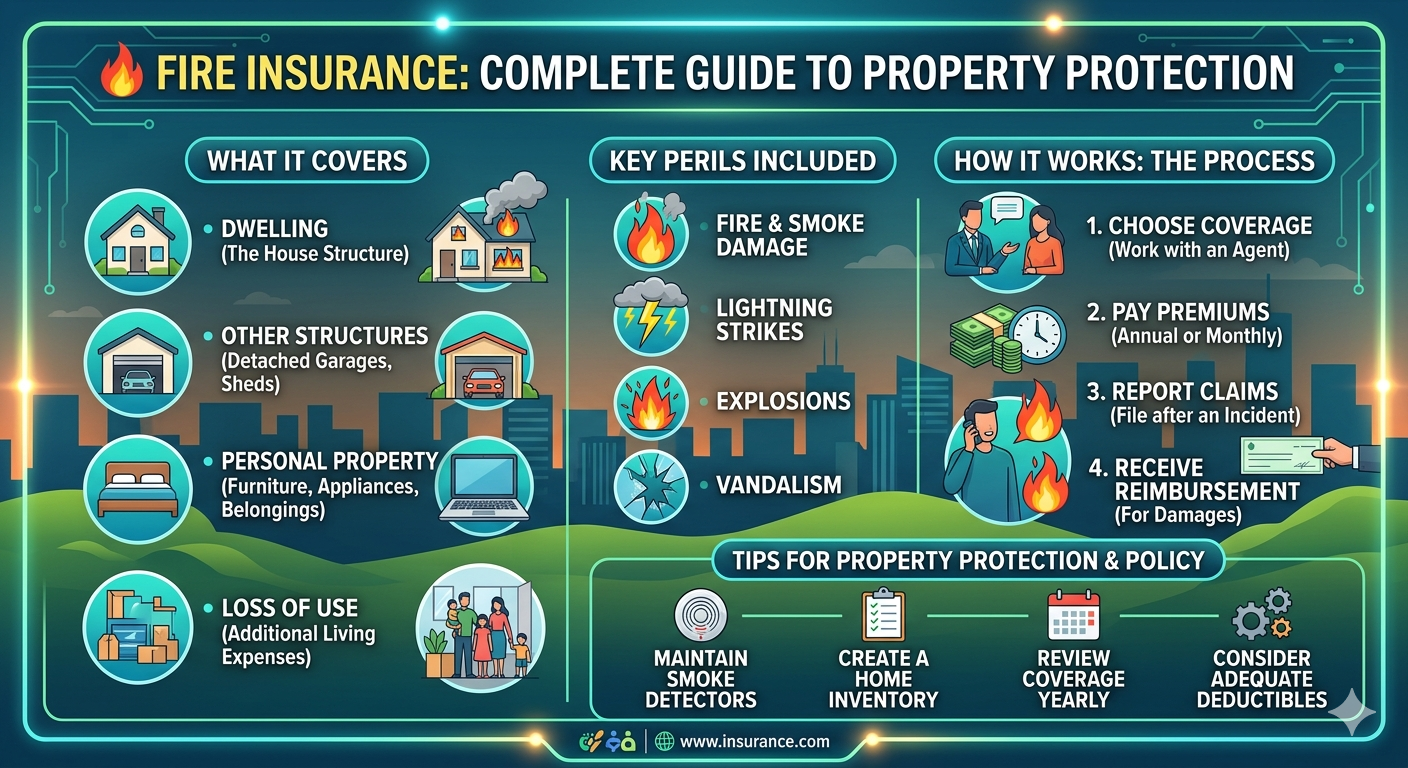
Fire insurance is a type of property insurance designed to help protect homeowners, renters, landlords, and businesses from financial losses caused by fire-related damage. Fires can occur unexpectedly and may result in significant damage to buildings, equipment, inventory, furniture, and personal belongings.
Understanding fire insurance is important for anyone who owns or occupies property. While some property insurance policies may include fire protection, separate fire insurance coverage or specific policy provisions may be necessary depending on the property type and coverage requirements.
This guide explains how fire insurance works, what it typically covers, common exclusions, benefits, limitations, and important considerations before purchasing coverage.
What Is Fire Insurance?
Fire insurance is a policy that provides financial protection against covered losses resulting from fire and related perils. The purpose of this coverage is to help policyholders recover financially after fire-related property damage.
Coverage may apply to residential properties, commercial buildings, personal belongings, equipment, and other insured assets, depending on policy terms and conditions.
How Fire Insurance Works
A property owner purchases a policy and pays premiums to maintain coverage. If a covered fire event damages insured property, the policyholder may file a claim with the insurance provider.
The insurer reviews the claim, investigates the cause of the damage, assesses the extent of the loss, and determines whether the event falls within the policy coverage.
If approved, compensation may be provided according to policy limits, deductibles, valuation methods, and other policy provisions.
What Fire Insurance Typically Covers
Building Damage
Coverage may help pay for repairs or rebuilding costs related to damage caused by covered fire incidents.
- Walls and ceilings
- Roof structures
- Floors
- Electrical systems
- Plumbing systems
- Permanent fixtures
Personal Property
Coverage may help protect personal belongings damaged by covered fire events.
- Furniture
- Electronics
- Clothing
- Appliances
- Household items
- Personal possessions
Business Property
Commercial policies may help protect business-related assets such as equipment, inventory, machinery, and office furnishings.
Smoke Damage
Many policies protect damage caused by smoke resulting from covered fire incidents.
Firefighting Damage
Damage caused during firefighting efforts may also be covered under certain policies.
Common Causes of Fire Losses
- Electrical faults
- Cooking accidents
- Heating equipment malfunctions
- Lightning strikes
- Candles
- Industrial accidents
- Wildfires
- Flammable material exposure
Understanding common fire risks can help property owners improve safety and reduce potential losses.
Types of Fire Insurance Coverage
Residential Fire Coverage
This type of coverage is designed for homeowners and residential property owners.
Commercial Fire Coverage
Businesses often purchase protection for buildings, inventory, equipment, and operational assets.
Contents Coverage
Contents protection focuses on personal belongings and movable property inside the insured premises.
Replacement Cost Coverage
Replacement cost coverage generally helps pay the cost of replacing damaged property with similar new property without deducting depreciation.
Actual Cash Value Coverage
Actual cash value coverage generally considers depreciation when calculating claim payments.
Benefits of Fire Insurance
Financial Protection
Fire-related losses can be expensive. Coverage may help reduce the financial burden associated with repairing or replacing damaged property.
Property Recovery Support
Insurance can help property owners recover after covered fire events and restore damaged assets.
Protection for Personal Belongings
Coverage may assist with replacing personal property damaged by fire.
Business Continuity Assistance
Businesses may benefit from protection for important assets necessary for ongoing operations.
Improved Risk Management
Insurance can form part of a broader strategy for managing property-related risks.
What Fire Insurance May Not Cover
Policies often contain exclusions and limitations. Common examples may include:
- Intentional damage
- Fraudulent claims
- War-related events
- Nuclear hazards
- Certain maintenance-related issues
- Property not listed in the policy
Coverage exclusions vary by insurer and policy type.
Factors Affecting Fire Insurance Costs
| Factor | Potential Impact |
|---|---|
| Property Location | Risk levels may influence premiums |
| Building Construction | Materials affect fire resistance |
| Coverage Limits | Higher limits may increase costs |
| Property Value | Higher values often require more coverage |
| Fire Safety Systems | Protective measures may affect pricing |
| Claims History | Past claims may influence premiums |
Risks and Limitations of Fire Insurance
Although fire insurance provides valuable protection, coverage is subject to policy limits, exclusions, deductibles, waiting periods, and claim requirements.
Policyholders should understand that not all fire-related losses may be covered under every policy.
Fire Insurance for Homeowners
Homeowners often rely on fire coverage to help protect their homes and personal belongings from fire damage. Coverage details vary depending on the policy structure and insurer.
Fire Insurance for Businesses
Commercial property owners may purchase coverage to help protect buildings, inventory, machinery, equipment, and other business assets from covered fire-related losses.
Common Mistakes Property Owners Make
- Underestimating property values
- Choosing insufficient coverage limits
- Ignoring policy exclusions
- Failing to update coverage after renovations
- Not documenting valuable property
- Skipping annual policy reviews
- Assuming all fire-related losses are automatically covered
Regular policy reviews can help ensure coverage remains aligned with current needs.
How to Choose Appropriate Coverage
Assess Property Value
Evaluate the replacement or rebuilding cost of the property and its contents.
Review Coverage Limits
Coverage limits should adequately reflect the value of insured assets.
Consider Fire Risks
Local environmental conditions and property characteristics may affect exposure to fire-related risks.
Compare Policy Features
Review exclusions, deductibles, endorsements, and claim procedures before selecting coverage.
Things to Consider Before Purchasing Fire Insurance
- Property value
- Coverage limits
- Deductible amounts
- Replacement cost options
- Policy exclusions
- Local fire risks
- Fire safety measures
- Claims service quality
This information is for educational purposes only and should not be considered financial advice.
Frequently Asked Questions
What is fire insurance?
Fire insurance is a property insurance policy designed to help cover losses caused by covered fire-related events.
What does fire insurance cover?
Coverage may include buildings, personal property, business assets, smoke damage, and certain firefighting-related damage, depending on the policy.
Is fire insurance included in homeowners’ insurance?
Many homeowners’ insurance policies include fire coverage, but policy details vary and should be reviewed carefully.
Does fire insurance cover smoke damage?
Many policies protect smoke damage resulting from covered fire incidents.
How are premiums determined?
Premiums are influenced by factors such as property value, location, construction materials, coverage limits, and claims history.
What is replacement cost coverage?
Replacement cost coverage generally helps pay for replacing damaged property with similar new property without considering depreciation.
Can businesses purchase fire insurance?
Yes. Many businesses obtain fire coverage to help protect buildings, equipment, inventory, and other commercial assets.
What are common exclusions?
Common exclusions may include intentional damage, fraud, certain maintenance issues, and risks specifically excluded by the policy.
Should coverage be reviewed regularly?
Many property owners review insurance coverage annually or after significant changes to the property.
Why is fire insurance important?
Fire-related losses can be substantial, and coverage may help property owners recover financially after covered incidents.