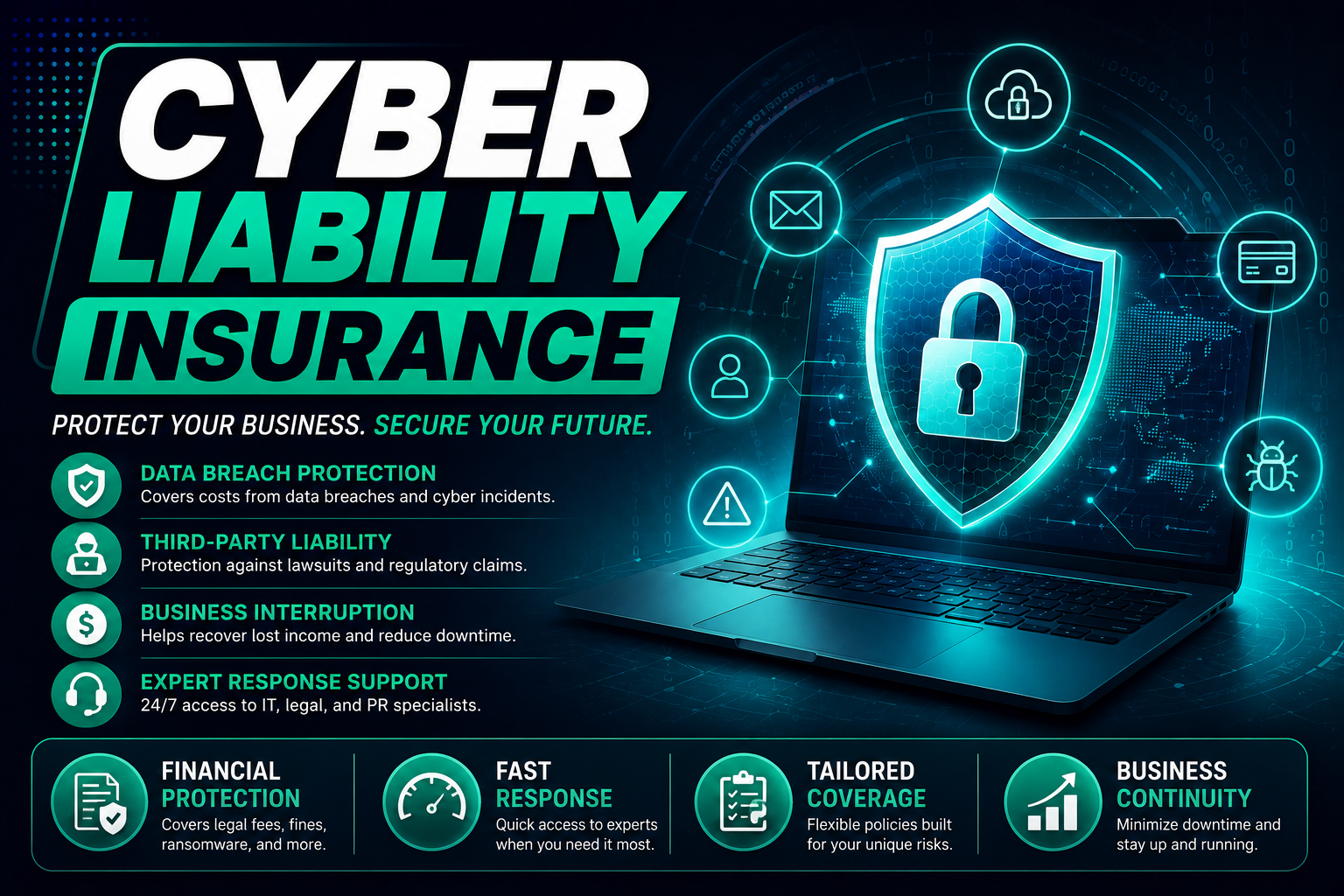
Cyber liability insurance has become an important consideration for businesses operating in an increasingly digital environment. Organizations of all sizes collect, store, and process sensitive information, making them potential targets for cybercriminals. A single cyber incident can lead to financial losses, legal expenses, operational disruption, and reputational damage.
Cyber liability insurance is designed to help businesses manage certain costs associated with cyber-related events such as data breaches, ransomware attacks, phishing incidents, and network security failures. While insurance cannot prevent cyberattacks, it may help reduce the financial impact when covered incidents occur.
This information is for educational purposes only and should not be considered financial advice.
What Is Cyber Liability Insurance?
Cyber liability insurance is a specialized form of business insurance that may provide financial protection against losses resulting from cyber incidents. Policies typically address risks related to electronic data, information systems, and online business operations.
As businesses increasingly rely on digital infrastructure, traditional insurance policies may not always provide adequate coverage for cyber-related losses. Cyber liability insurance is designed to fill some of these coverage gaps.
Coverage details vary significantly between insurers and policies. Businesses should carefully review policy terms, exclusions, limits, and conditions before making any insurance decisions.
Why Cyber Risks Matter for Modern Businesses
Cyber threats affect organizations across many industries, including retail, healthcare, finance, education, manufacturing, and professional services. Even small businesses may face cyber risks because attackers often target organizations with limited security resources.
Common consequences of cyber incidents include:
- Unauthorized access to sensitive data
- Business interruption and downtime
- Loss of customer trust
- Regulatory investigations
- Legal claims from affected parties
- Recovery and restoration expenses
- Public relations and reputation management costs
Because these expenses can accumulate quickly, many organizations evaluate cyber liability insurance as part of their broader risk management strategy.
How Cyber Liability Insurance Works
When a covered cyber incident occurs, the policyholder may notify the insurer and begin the claims process. Depending on the policy terms, the insurer may assist with incident response services, legal support, forensic investigations, and covered financial losses.
The general process often includes:
- Detection of a cyber incident
- Notification to the insurance provider
- Investigation and assessment of the event
- Evaluation of policy coverage
- Payment of eligible covered costs subject to policy limits and deductibles
Coverage eligibility depends on the specific circumstances of the incident and the policy language.
Types of Cyber Liability Insurance Coverage
First-Party Coverage
First-party coverage generally focuses on losses experienced directly by the insured business.
Examples may include:
- Data recovery expenses
- Business interruption losses
- Cyber extortion response costs
- Digital asset restoration
- Forensic investigation services
- Notification expenses after a data breach
Third-Party Coverage
Third-party coverage generally addresses claims made against the business by customers, partners, vendors, or other affected parties.
Examples may include:
- Legal defense costs
- Privacy liability claims
- Network security liability
- Settlement expenses were covered
- Regulatory response costs were permitted
Common Cyber Threats Covered by Policies
Coverage varies among providers, but cyber liability insurance may address several common cyber risks.
Data Breaches
A data breach occurs when unauthorized individuals gain access to confidential information. This may include customer records, employee information, financial data, or proprietary business information.
Ransomware Attacks
Ransomware can encrypt business data and disrupt operations. Some policies may assist with incident response and recovery-related expenses, subject to policy terms.
Phishing and Social Engineering
Cybercriminals frequently use deceptive communications to obtain sensitive information or initiate unauthorized transactions. Coverage for social engineering losses varies significantly by policy.
Network Security Failures
Businesses may face claims if security weaknesses result in harm to customers, vendors, or other third parties.
Malware Infections
Malicious software can damage systems, compromise data, and interrupt operations. Certain recovery costs may be covered depending on policy provisions.
Key Features of Cyber Liability Insurance
Many cyber insurance policies include a combination of services and protections.
- Incident response support
- Cybersecurity forensic investigations
- Legal assistance
- Public relations guidance
- Breach notification support
- Business interruption coverage
- Data restoration assistance
- Risk assessment resources
The exact benefits depend on the insurer and selected coverage options.
Benefits of Cyber Liability Insurance
Financial Protection
Cyber incidents can generate significant expenses. Insurance may help businesses manage certain covered costs arising from a cyber event.
Access to Professional Support
Many insurers provide access to cybersecurity specialists, legal advisors, and forensic experts who can assist during incident response.
Improved Risk Management
Some insurers offer educational resources and cybersecurity assessments that help organizations identify vulnerabilities.
Business Continuity Assistance
Coverage may support recovery efforts that help organizations restore operations after covered disruptions.
Enhanced Stakeholder Confidence
Maintaining cyber insurance may demonstrate a commitment to risk management and data protection practices.
Risks and Limitations of Cyber Liability Insurance
Cyber liability insurance provides important protection, but it is not a complete solution to cybersecurity risks.
Coverage Exclusions
Policies often contain exclusions that limit coverage in specific situations. Understanding these exclusions is essential before purchasing a policy.
Coverage Limits
Financial protection is typically subject to policy limits. Large-scale incidents may exceed available coverage.
Deductibles and Waiting Periods
Policyholders may be responsible for deductibles and other out-of-pocket expenses.
Security Requirements
Insurers may require businesses to maintain certain cybersecurity controls. Failure to meet these requirements could affect coverage.
Evolving Cyber Threats
The cyber threat landscape changes rapidly, and not every emerging risk may be covered under existing policies.
Who Should Consider Cyber Liability Insurance?
Cyber liability insurance may be relevant for organizations that:
- Store customer information
- Process online payments
- Maintain employee records
- Use cloud-based systems
- Conduct e-commerce operations
- Manage sensitive business data
- Depend heavily on digital infrastructure
Businesses of various sizes may evaluate cyber insurance based on their risk exposure, industry requirements, and operational needs.
Factors That Influence Coverage Costs
Insurance pricing varies based on numerous factors.
| Factor | Potential Impact |
|---|---|
| Business Size | Larger organizations may face higher exposure levels |
| Industry Type | Certain industries handle more sensitive information |
| Data Volume | More stored data may increase risk exposure |
| Cybersecurity Controls | Strong security practices may influence underwriting |
| Claims History | Previous incidents may affect policy terms |
| Coverage Limits | Higher limits generally increase premiums |
Businesses should obtain quotes from multiple providers and compare policy details carefully.
How to Evaluate a Cyber Liability Insurance Policy
Review Covered Events
Understand which cyber incidents are included within the policy.
Examine Exclusions
Review situations where coverage may not apply.
Assess Coverage Limits
Determine whether policy limits align with potential financial exposure.
Understand Incident Response Services
Evaluate available support services such as legal assistance, forensic investigations, and breach management.
Check Regulatory Coverage
Businesses operating in regulated industries may want to understand how the policy addresses compliance-related matters.
Cybersecurity Best Practices Alongside Insurance
Insurance should complement, not replace, cybersecurity measures.
- Use multi-factor authentication
- Maintain regular software updates
- Train employees on cybersecurity awareness
- Implement strong password policies
- Back up critical data regularly
- Monitor networks for suspicious activity
- Conduct security assessments periodically
- Develop an incident response plan
Combining preventive measures with insurance coverage may strengthen an organization’s overall risk management approach.
Common Mistakes Businesses Make
- Assuming general business insurance covers all cyber risks
- Ignoring policy exclusions
- Selecting coverage based only on price
- Failing to maintain cybersecurity controls
- Not updating coverage as the business grows
- Overlooking employee cybersecurity training
- Waiting until after an incident to evaluate coverage needs
Things to Consider Before Purchasing Cyber Liability Insurance
- Your organization’s cyber risk exposure
- Types of data collected and stored
- Industry-specific requirements
- Available cybersecurity controls
- Potential financial impact of an incident
- Policy exclusions and limitations
- Coverage limits and deductibles
- Claims support and incident response services
This information is for educational purposes only and should not be considered financial advice.
Frequently Asked Questions
What does cyber liability insurance cover?
Coverage may include expenses related to data breaches, cyberattacks, business interruption, legal claims, forensic investigations, and other cyber-related incidents, depending on the policy.
Is cyber liability insurance required by law?
Requirements vary by jurisdiction and industry. In many cases, cyber liability insurance is optional, although certain contracts or regulations may influence coverage decisions.
Can small businesses benefit from cyber liability insurance?
Small businesses may face cyber risks similar to larger organizations and often evaluate cyber insurance as part of their overall risk management strategy.
Does cyber liability insurance prevent cyberattacks?
No. Insurance does not prevent cyber incidents. It is designed to help manage certain financial consequences associated with covered events.
What is the difference between cyber liability insurance and general liability insurance?
General liability insurance primarily addresses physical injury and property damage claims, while cyber liability insurance focuses on digital and cyber-related risks.
Does cyber liability insurance cover ransomware attacks?
Some policies may provide coverage for certain ransomware-related expenses, subject to policy terms, conditions, and exclusions.
How do insurers assess cyber risk?
Insurers often evaluate factors such as cybersecurity controls, business operations, industry sector, claims history, and data management practices.
Can cyber liability insurance cover legal expenses?
Many policies include coverage for certain legal defense costs and liability claims arising from covered cyber incidents.
What industries commonly purchase cyber liability insurance?
Healthcare, finance, retail, technology, education, professional services, and e-commerce businesses commonly evaluate cyber insurance due to their digital operations and data exposure.
How often should a business review its cyber insurance coverage?
Businesses often review coverage annually or whenever significant operational, technological, or regulatory changes occur.